
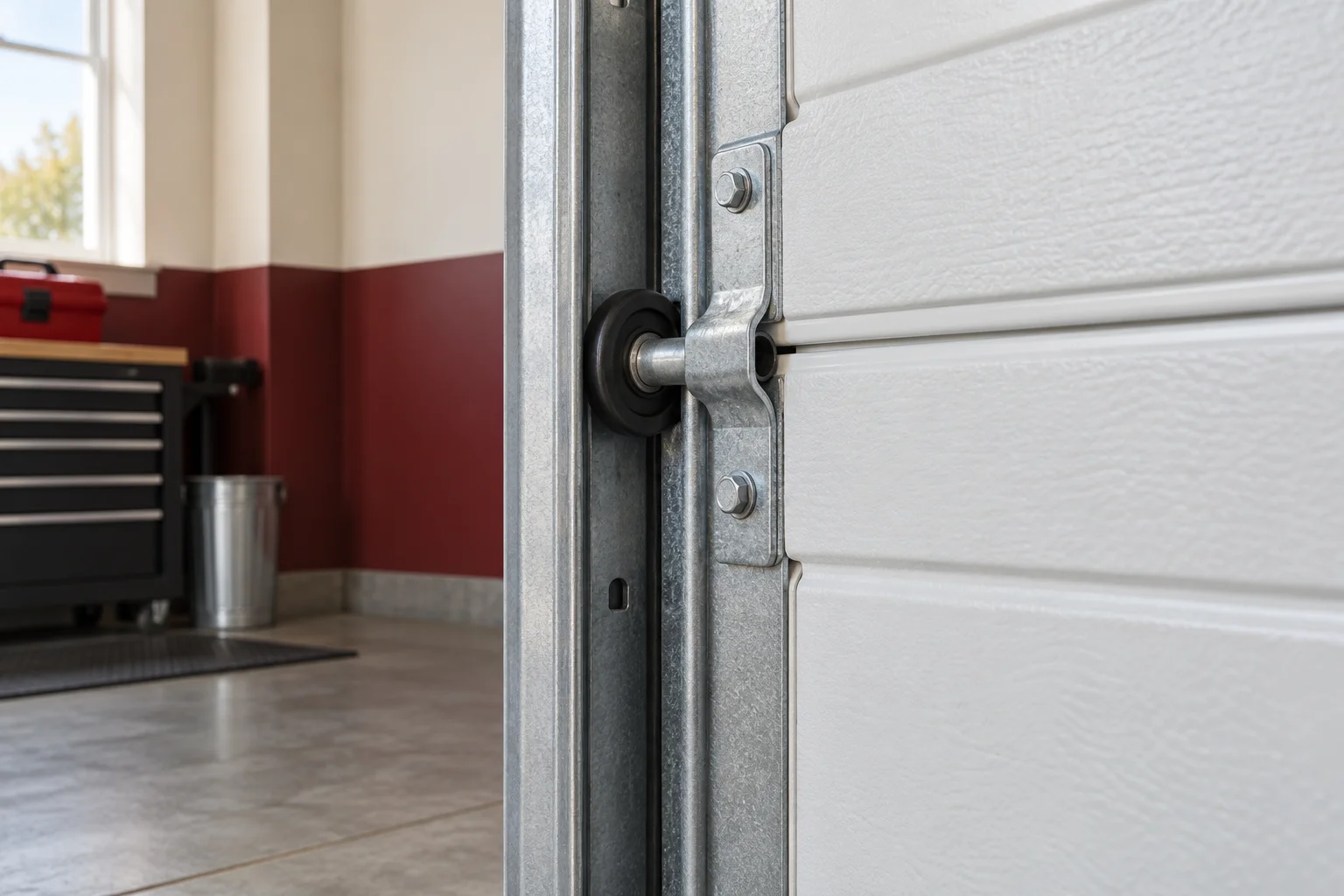
Identify the kind of lock
A slide lock on the door, an exterior key release and an automatic lock connected to a compatible operator do different jobs. Photograph visible labels from a safe position and explain what changed before the problem began. Do not assume an exterior key cylinder is a security lock rather than an emergency-release component.
Stop when the functions conflict
If a manual lock is engaged or the door resists the opener, avoid testing stronger force settings. Have the lock arrangement and door condition assessed before further use. The correct operating instructions depend on the installed system; an automatic lock is not an accessory that can simply be added to any opener because it fits near the track.
Keep the handover clear for every user
Ask the installer to explain normal locking, power-loss access and any control that should not be used with the automatic operator. Record the compatible part number if an automatic lock needs replacement. Labels and a household demonstration are useful, but they should match the manufacturer’s actual arrangement rather than create an improvised lock-bypass procedure.
Your questions
Is the emergency-release cable the same as a powered lock?
No. Release and locking features serve different purposes. Identify the product before attempting to operate an unfamiliar control.
Should I increase motor force if the lock does not release?
No. A lock or mechanical obstruction needs assessment; additional force can damage the assembly and does not correct the fault.